
Less Overwhelmed: Simple Habits for a Calmer Daily Life
Lifestyle and Welness
You know the feeling: the cold coffee, the inbox pinging non-stop, and you’re already mentally juggling three different tasks before 9 AM, wondering how you’ll get everything done. That constant pressure, the sense of always being a step behind, is an exhausting reality for so many of us. It leaves us wondering: how can we truly slow down the spin, feel less overwhelmed daily, and reclaim some peace amidst the daily chaos of work, family, and personal commitments? Here, we'll dive into realistic, small habits you can genuinely start integrating into your routine this very week to quiet the noise, bring a bit more balance, and create a calmer daily life. (Of course, for significant personal medical or mental health concerns, always consult a professional.)
The surprising truth about why we feel constantly busy
Ever feel utterly swamped, just staring at your phone or out the window, while your brain screams, "So much to do!"? This constant busyness, even without active tasks, is incredibly common. It’s not just in your head. Your brain is wired to solve problems, always scanning for demands. Our always-on world, with constant notifications and endless to-do lists, keeps us in a low-level "on-call" state. This drains mental energy even when we're trying to rest. This pervasive feeling isn't a personal failing; it's a real, physiological response. Your brain is like a supercomputer constantly running unseen background programs – from scheduling appointments to replying to emails, planning dinner, or worrying about a friend. These mental demands consume significant energy, leaving you exhausted even when physically at rest. The key insight: it’s not always about *doing* more, but the *mental load* of *thinking* about more. Acknowledging this crucial difference is the first step. To begin, try a simple experiment this week: for a few days, simply *notice* when that overwhelmed feeling hits, even if you’re doing nothing. What specific thoughts or worries are swirling? Pinpointing these can be incredibly insightful. (For persistent overwhelm, consult a healthcare professional for personal concerns.) This initial act of observation is the first step towards understanding that constant buzz, which we’ll learn to quiet in our next section.

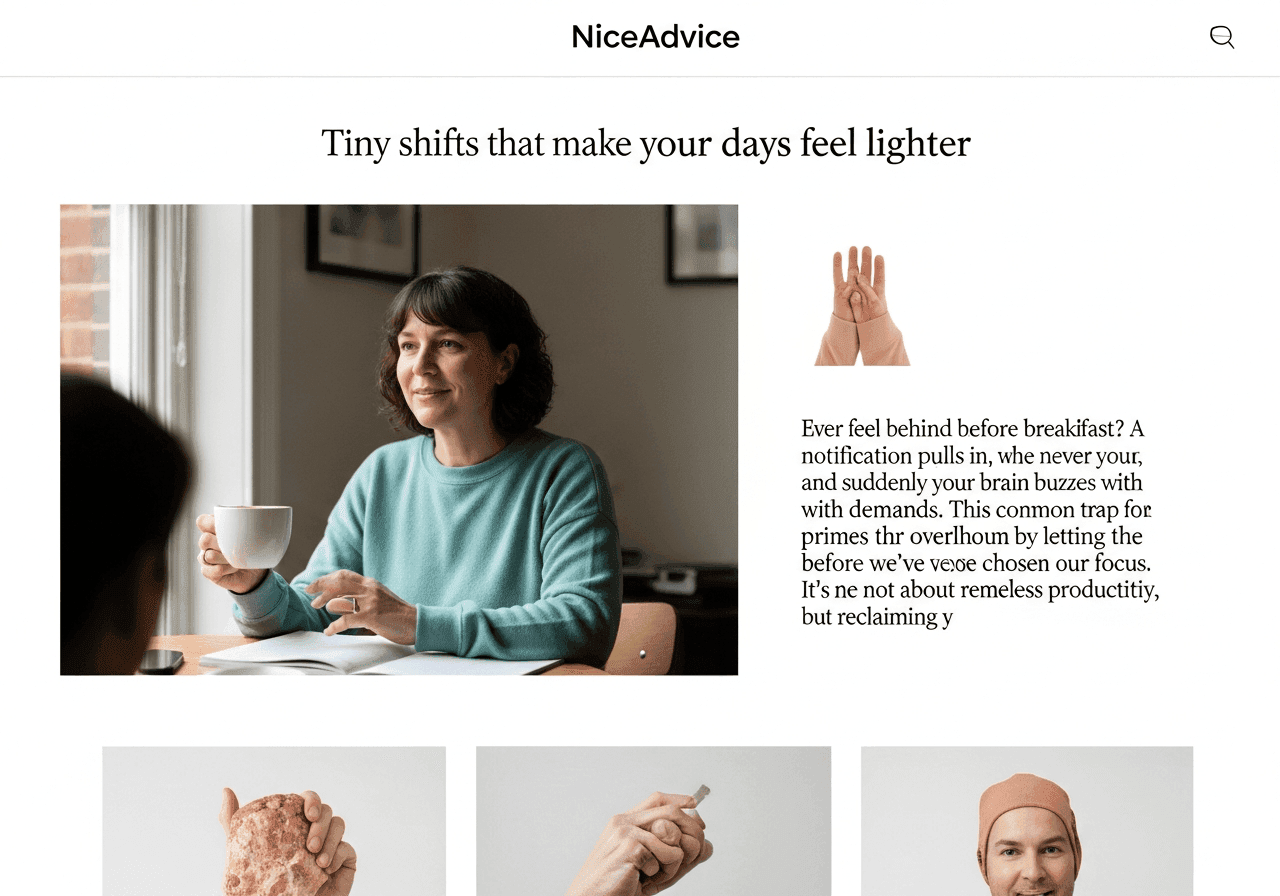
Tiny shifts that make your days feel lighter
Ever feel behind before breakfast? A notification pulls you in, then another, and suddenly your brain buzzes with demands. This common trap primes us for overwhelm by letting the world pour in before we’ve chosen our focus. It’s not about relentless productivity, but reclaiming your morning. Instead of diving into your phone, try a "Five-Minute First-Focus." Before *any* app or email, take five minutes for something intentional. Make tea, look out a window, or just sit quietly. The goal: consciously *choose* your first task. Sarah, a marketing manager, started by having her first coffee phone-free. Her stress dropped, she felt more focused. She called it her "brain's warm-up lap." This isn't a magic bullet; life happens. But the power is in that *conscious choice*. If persistent overwhelm impacts your daily life, speak with a healthcare professional. Even five intentional minutes can shift your day's rhythm, turning reaction into calm action. Try it tomorrow; you might be surprised how much lighter your morning feels.

Jennifer Trimbee

Aug 19, 2025

0 reading now
10 General Symptoms of Personality Disorder
Personality disorders are complex mental health conditions that significantly impact how individuals perceive themselves and others, often leading to difficulties in daily functioning. These disorders typically manifest in adolescence or early adulthood and can persist for many years. Understanding the general symptoms can be crucial for seeking appropriate treatment and support. Symptoms of personality disorders often include an enduring pattern of inner experience and behavior that deviates markedly from the expectations of the individual's culture. This pattern is pervasive and inflexible, leading to distress or impairment in personal, social, and occupational situations. These symptoms are typically grouped into categories such as cognitive, emotional, interpersonal, and impulse control problems. It is important to remember that while these symptoms can guide towards a diagnosis, a qualified mental health professional should conduct a comprehensive assessment to determine the presence of a personality disorder.
Read more
Jennifer Trimbee
Disclaimer
This site offers information designed for educational purposes only. You should not rely on any information on this site as a substitute for professional medical advice, diagnosis, treatment, or as a substitute for, professional counseling care, advice, diagnosis, or treatment. If you have any concerns or questions about your health, you should always consult with a physician or other healthcare professional.



Discussion
0No comments yet
Be the first to share your thoughts on this article.