
Find Calm: Tiny Breaks for a Less Stressful Week
Lifestyle and Welness
You just sat down with your coffee, ready to tackle the day, but a glance at your phone reveals a fresh wave of emails, a forgotten appointment, and a text about the kids’ school trip. Suddenly, that imagined moment of peace vanishes, replaced by the familiar drumbeat of a never-ending to-do list. We’ve all been there, feeling perpetually behind, convinced there’s no room for a real pause button in our demanding lives, that taking a breath is just another luxury we can't afford. So, how do we realistically build small moments of calm when our schedules feel relentlessly packed, and the world keeps asking for more? In this article, we’ll explore practical, no-fuss strategies that don't demand a full hour of meditation, a weekend retreat, or a complete overhaul of your routine. Instead, we’ll show you how to sprinkle tiny, effective breaks throughout your busiest days, helping you feel more centered, genuinely less stressed, and more in control, starting this week, not next month.
Why your peace vanishes with constant demands
That feeling when you wake up feeling relatively clear-headed, ready to tackle the day, only for it to be completely obliterated by 10 AM? One email after another, a string of texts, kids needing something, the thought of dinner ingredients, and that persistent mental checklist of chores and errands. By the time evening rolls around, that early morning peace has vanished, replaced by a low hum of anxiety or pure exhaustion. It’s like your brain is running a dozen tabs at once, none of them fully loading, and the battery is critically low. Our brains simply aren’t designed for this relentless "on" switch, constantly demanding attention from multiple directions. When we're bombarded with tasks and information, our ancient stress response system kicks in, flooding our body with hormones like cortisol, meant for fight-or-flight emergencies. Staying in this state drains our mental reserves, makes it harder to focus, and leaves a lingering sense of unease. Think of it like a computer trying to run too many heavy programs simultaneously; it slows down, crashes, or just becomes frustratingly unresponsive. Plus, when you switch tasks rapidly, a bit of your attention often remains on the previous item, a phenomenon sometimes called "attention residue." This makes it harder to fully engage with what’s in front of you, increasing errors and overall stress. (While this article offers general insights, please remember to chat with a doctor if you have personal health concerns related to stress.) Just being aware that your brain needs a beat to switch gears is a huge step. Recognize that the constant pull isn't just annoying; it's genuinely depleting your mental and emotional peace. Give yourself permission to acknowledge the toll this takes. It’s not laziness to want a break; it’s an essential system reboot for your brain. Understanding why our peace drains away is the first step to reclaiming it. The good news? You don't need a week-long retreat to hit reset. Small, intentional pauses can make a big difference, and that's exactly what we'll dive into next.

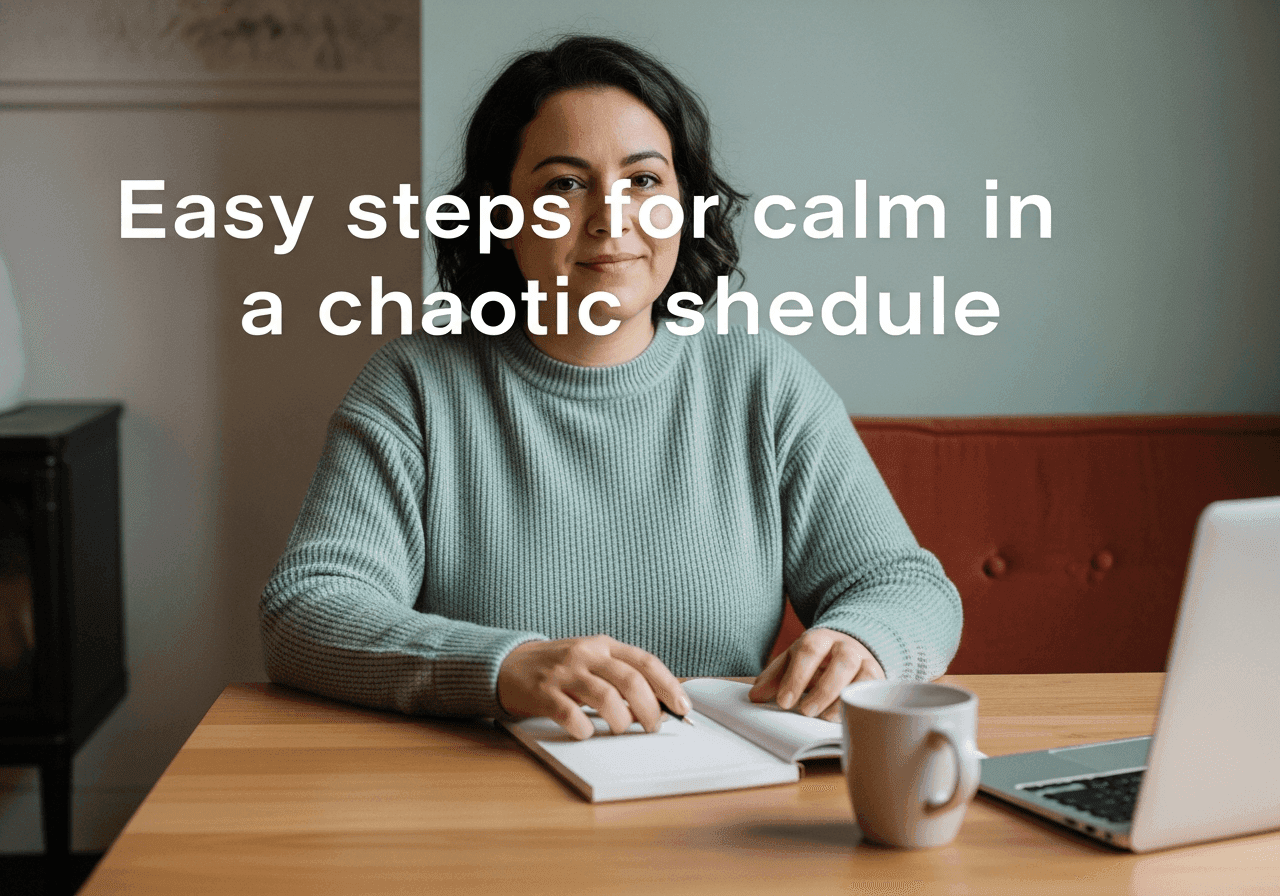
Easy steps for calm in a chaotic schedule
We often tell ourselves we don't have time for a break. A whole hour? Forget it. Even 15 minutes feels like a luxury we can't afford when the to-do list is staring us down. The truth is, you don't need a spa day to hit reset. What if you only had 60 seconds? Instead of mindlessly scrolling during inevitable lulls – like waiting for the kettle or a document to load – try a "60-Second Reset." Pause. Close your eyes for three deep, slow breaths – in through your nose, out through your mouth. Or, glance out a window and observe something outside for a few seconds. Stand up for a quick overhead stretch, reaching for the sky. Simply disengage and focus on one thing. You could even schedule these micro-breaks, 11:30 AM and 3:00 PM, like mini-meetings with yourself. These won't solve every problem, and you'll forget sometimes – that’s okay. Don't aim for perfection, just presence. The cumulative effect of these tiny moments can be surprisingly powerful. You're gently retraining your brain to find pockets of peace amidst the noise. Try just one tiny break today; simply notice the difference it makes.

Jennifer Trimbee

Aug 19, 2025

0 reading now
10 General Symptoms of Personality Disorder
Personality disorders are complex mental health conditions that significantly impact how individuals perceive themselves and others, often leading to difficulties in daily functioning. These disorders typically manifest in adolescence or early adulthood and can persist for many years. Understanding the general symptoms can be crucial for seeking appropriate treatment and support. Symptoms of personality disorders often include an enduring pattern of inner experience and behavior that deviates markedly from the expectations of the individual's culture. This pattern is pervasive and inflexible, leading to distress or impairment in personal, social, and occupational situations. These symptoms are typically grouped into categories such as cognitive, emotional, interpersonal, and impulse control problems. It is important to remember that while these symptoms can guide towards a diagnosis, a qualified mental health professional should conduct a comprehensive assessment to determine the presence of a personality disorder.
Read more
Jennifer Trimbee
Disclaimer
This site offers information designed for educational purposes only. You should not rely on any information on this site as a substitute for professional medical advice, diagnosis, treatment, or as a substitute for, professional counseling care, advice, diagnosis, or treatment. If you have any concerns or questions about your health, you should always consult with a physician or other healthcare professional.



Discussion
1I always feel like I *should* take a break, but then the guilt of the to-do list kicks in. Any tips for that?